Tuesday, January 02, 2007

Musicians Who Died in 2006

2006 has been a year of death, really. International conflicts and natural disasters kept death in the news all year, and cast a very dark pall over New Year's celebrations.

Yet it was also a year to lose some significant musicians and artists, many of whom spent their careers trying to inspire and move people. Here's a short list of some artists that passed on in 2006.

The list could have been far more extensive, but I chose to only post about those people who moved me directly. Obviously, another writer could have a very different list.

Most notably, in 2006 we lost James Brown, the Godfather of Soul. Dutch Mason, the Canadian blues guitarist, died late in the year. Sid Barrett, the original singer of Pink Floyd and a notable solo artist in his own right also died this past year.

Ahmet Ertegun, while not a musician, was a force behind artists as diverse as Joni Mitchell, Miles Davis and Ray Charles. He died from injuries sustained backstage at a Rolling Stones concert. While sad, it could probably make some other list of "best ways to go".

Robert Lockwood, Jr, like all blues guitarists, died described as "a legend". Billy Preston, (see image above) was described by many, including himself, as the 5th Beatle.

Ali Farka Toure, guitarist and singer, achieved some commercial success in his later years, whereas J. Dilla, hip hop producer and DJ (and some would say genius) created an indelible mark despite his young age.

It is no exageration to say that scrolling through the seemingly endless lists of notable deaths in 2006 made for one of the hardest posts I've had to write (and took much longer than expected). Seeing all the "notable" people made me think of how we'll each be remembered. And obviously, addressing the death of others can often inspire thoughts on one's own mortality. Not fun when scanning hundreds of names of the deceased.

However, I can take some solace in listening to the works of the above artists, or the artists they were most associated with, as we move forward in 2007.

Thursday, December 14, 2006

Hip Hop Action Figures - Just in Time for the Hollah Days

Wondering what to get for the hip hop fan on your holiday list, who already has everything (including this, this and this)?

Why not consider picking up the new Madvillain action figure, created by Kid Robot. Or, if your hip hop holiday is more traditional (read: ol skoo!), consider Chuck D & Flavor Flav of Public Enemy. Or, perhaps the late, great Notorious B.I.G. (now incongrously 8.5 inches tall) would fit the bill?

What strikes me most about these figures is their similarities, despite being made by different companies (Kid Robot made the Madvillain figure, as well as figures of Gorillaz, and PE & Biggie were made by Mezco Toyz). Roughly the same size, made in a deliberately chunky style with extra bling, their most notable similarity is probably the disproportionately large hands. Cuz you know what they say about hip hop guys with big hands (they make tiny action figures).

Perhaps some company will make an 8.5 inch tall likeness of The Power for these hip hop heroes to fight...

Friday, November 10, 2006

A Note on the Amen and Apache Drum Breaks

I was inspired on the weekend, reading Will Hermes' piece in the New York Times about a recent re-issue of material by The Incredible Bongo Band. The Bongo Band's song "Bongo Rock" produced the drum break most widely known as "the Apache break", which, depending on exactly how Ol your Ol Skool knowledge is, could be considered the most widely sampled drum break in hip hop history.

Those who know hip hop really know hip hop, and I am not going to argue about the specifics of hip hop history--particularly when reprisals can be so dangerous.

However, when you begin to include trip hop, cinematic hip hop, electronic music and other hip hop offshoots, it would seem the most widely sampled break is either the Amen, or Funky Drummer.

All of this is noteworthy to me for a simple reason: sample culture is awesome. While I maintain that the chasm between the merely mediocre and truly brilliant producer is significant, there is something culturally cool about referencing the same source material and taking it in new directions. Not unlike jazz solos that riff and reference other jazz pieces, sample-based music may be linked by a common passion for what each DJ or producer carries in their crate, but it is also linked by a few artists and motifs that act as pillars for the overall aesthetic.

Some further reading on the Amen break.

Thursday, November 09, 2006

Ed Bradley's Music Writing

Ed Bradley (1941 - 2006) is being euologized in the press right now. All the tributes are glowing and I have not disagreed with a single one.

He worked in mainstream media and that carried a certain puffiness with it, but his ability to work inside the medium was skilled and subtle. He could get the tough questions asked without hardening his affable, cool demeanor. He unlocked doors, he offered some light.

The footage of his career, especially early reportage out of Vietnam, is impressive. His interviews with 60 Minutes were well regarded (18 Emmies) and well known. But less recognized is Bradley's musical knowledge.

His interview with Bob Dylan in December of 2004 offered insights much richer than Dylan's autobiography at times. His love for and knowledge of jazz was well known, hosting the Jazz from Lincoln Center performance series and generally supporting the music.

But I prefer his piece on U2, which just goes to show that if you want to hear Bono say something pretentious, just ask him a question. Or, possibly, stand near him for awhile.

Robert Allen - 1946 - 2006

Many Montreal writers have been reflecting on the recent passing of Rob Allen. I just wanted to take brief moment to recognize this loss, and give some space to the tributes that are being written for him.

Rob was the Publisher of Matrix Magazine, and will be fondly remembered by the many people who he touched, toasted and taught. My own experience with Rob was limited -- a few conversations at Matrix meetings or book launches -- but it seems that everyone I know has a story about Rob. I think, in the end, that's the most fitting tribute there is.

Monday, October 09, 2006

Pop Montreal Coverage in Midnight Poutine

Whew. It has been a very busy few days, checking out some stuff at Pop Montreal for local blog Midnight Poutine. As it is all music related, I thought I would post a link to it in this post, rather than re-producing all the content here (everything I write for MidPout is also available via the links at right).

I particularly enjoyed the set by A Northern Chorus, and would gladly see them any other time they come to town.

Also picked up some more material for review, so there will be stuff about that in the coming days.

In the meantime, have a read of this stuff.

Wednesday, October 04, 2006

The Graveyard - Matrix Magazine issue 75


This is The Graveyard column from Matrix Magazine, issue 75. The columnists tend to not be carried on the Matrix website, so I'm posting it here in its entirety because it features reviews of 5 noteworthy independent Canadian artists. Enjoy.

The Graveyard
by Scott W. Gray

Announcements about the
Echo and Polaris prizes came to me around the time I was writing this issue’s piece, and I must say I’m pleased that independent artists are finally being recognized on their merits. Both of these prizes are juried by media flacks and awarded for songwriting, rather than unit sales, genre, or sculpted, muscular booties.

As these prizes recognize, there is an abundance of great bands in this country. There always has been, of course, but history shows that groups die out due to a lack of exposure and subsequent financial problems. Recording and distributing an album (not to mention touring a country of this size) is expensive. The Canadian industry has grown up a lot, market economics have changed a bit in the digital world, and there’s now a real possibility for independent bands to be reasonably successful here.

Exposure, however, still means everything to this process, and I can support anything (like the Polaris and Echo prizes, odd blogs, etc.) that shines the spotlight on the great talent here. With this in mind, here are songs by five artists that were in regular rotation on the Graveyard stereo over the last few months. I urge you check them out.

Christine Fellows: When I first heard Mary Margaret O’Hara’s “Body’s In Trouble” I stopped dead in my tracks, my thin teenage shoulders pulled up like I expected a crash behind me. Utterly arresting, disquieting, and inimitable. Christine Fellow’s song “Vertebrae”, from her Paper Anniversary album (
Six Shooter), has much the same quality. It’s an exercise in restraint and tense understatement. Excellent musicianship (particularly from the strings and percussion) accompanies a voice that’s clear in the upper register and slightly frayed in the middle tones. Warm electric piano sounds and cello sweeps trail out over not-as-goofy-as-you’d-expect glockenspiels. If you think she’s prodigiously talented when she says, “I am deadfall. Deadfall,” then wait for the chorus. One of the most startling albums I’ve heard recently.

The Besnard Lakes: From Besnard Lakes’ yet-to-be-released album Dark Horse Transmissions, I spent a good deal of time listening to “Ride the Rails”. This new Besnards album (to be released on
Jagjaguwar this fall) is considerably more orchestrated than Volume I, their previous release, with strings, choir-like vocals, and field recordings that jackknife into the arrangements against the Besnards’ signature guitars (high-volume, dive-bombing). “Ride the Rails” displays their development: essentially two songs in one that pivot on a single guitar riff nearly two minutes in, “Ride the Rails” features members of Bell Orchestre complimenting a very-70s mood piece that shifts into a solemn but hooky chorus drenched in reverbed vocals. As well, the vocals on the new album are stronger than in the past, offering more confident deliveries and tighter harmonies. If Volume I was the Besnard Lakes’ Loveless, then Dark Horse Transmissions is their Pet Sounds.

Islands: Formed from the brittle little bones of the Unicorns, Islands emerged in 2006 with Return to the Sea (
Equator Records). Full of some of the smartest dumb pop you’ve ever heard, this is the sort of album that ends up in endless repeat because you hum it to yourself for hours after hearing it. The track that stuck with me most was “Rough Gem” (though “Don’t Call Me Whitney, Bobby” was a very close second), with its ‘Come On Eileen’ melody, tiny pizzicato string breaks, and tight but not flashy drums, this song left me scratching my head and pumping my fist. As an added touch, I like hearing Nick Diamonds singing about diamonds.

World Provider: What most music writers will tell you (over beers that you will have to pay for) is that a great deal of material arrives for review that sounds just like everything else, even among the non-mainstream albums out there. But nothing really sounds like World Provider’s Lost Illusions (out on
Ta-Da). You can draw associations among the art-rock bands that he could be referencing (Devo, for example) but it takes a very strange sensibility to put them together as World Provider does. Strange tastes, oddly unsettling. The most successful songs on Lost Illusions follow a synth driven melodic lead, with interesting vocal harmonic lines – sometimes manipulated digitally – and very simple snare-kick, hat-handclap percussion. “Valentine” made onto my mix discs and took me through most of this summer. Featuring a guest appearance by Leslie Feist, “Valentine” merges a loping, neo-country vocal twang over fuzzy electro in a surprisingly effective way. Sneaks up on you, then bam! you have a weird moustache and you’re dancing in unfamiliar clothes.

Bell Orchestre: Bell Orchestre’s stunning instrumental debut album Recording a Tape in the Colour of the Light (released on
Rough Trade in late 2005) is a roiling weird of french-horns, violins and trumpets that I listened to all spring. I was impressed by the subtlety and interplay between the instruments on quieter tracks, but I was unprepared for the way “The Upward March” rocked out. Built over a very simple digital click, the band adds textures and colours to create a piece that by its end is locked in a solid groove, while still tearing against itself. A sort of hyphen band (i.e.: post-rock, or math-rock, or classically-inspired, all of which apply), Bell Orchestre create pieces rather than songs, but there’s a vitality to them all that keep them fresh and unpretentious. Long, murmuring drones open out to raucous crashes and stabbing horns; the music is a stormy affair. “The Upward March” is probably the most luminous and anthemic on the album, so it’s an obvious repeater on the ipod, but the album as a whole creates a mood worth pursuing.

With independent Canadian talent increasingly being recognized by labels and media (and ugh…”
tastemakers”) outside the country, listeners here deserve to know what that faint buzz is about. If you haven’t heard the five albums above, or any of the finalists in the prizes I’ve mentioned, I recommend tracking them all down. Each artist is unique but they share some strange commonalities - quirkiness, a sort of optimistic sadness, rich, idiosyncratic songwriting, and ultimately, independence.

(from Matrix issue 75)

Thursday, September 21, 2006

Final Fantasy wins Polaris Prize

The Polaris Prize was announced this week, going to Final Fantasy - solo project of Ontarian Owen Pallet - and his album He Poos Clouds.

Like Magnetic Fields meets Andrew Bird, Final Fantasy brings witty lyrics together with a violin that is kicking against its own tradition. He has a good voice and sense of melody but more impressive is how his music is out of synch with most things except itself: like he was just born sounding this way and didn't have to practice his ass off for it.

For his troubles, Pallet is awarded $20,000, which he says he will share with his Blocks Recording Collective pals (and who could be more deserving than they?). Any of the finalists for this prize would have deserved winning it, but I must say my own bent toward solo artists makes me particularly chuffed about Final Fantasy taking home the prize.

Canadian Press article here.

Wednesday, September 20, 2006

Elliott Brood - Ambassador

Elliott Brood
Ambassador
Six Shooter, 2005

Ambassador’s outer sleeve looks like a wooden box, maybe meant to mimic a cigar box, or perhaps ammunition or something. The sleeve contains a reproduction of a train ticket from 1929 (one-way in coach, New York to Detroit, overnight), and includes album info on what looks like draughtsman velum. The effect (especially with the ticket) reminds me of the Who’s Live at Leeds. These are great details that downloading culture has made us forget that we love.

This album, like a good night of hard drinking, is a loose rambler, starting off with a determined momentum that slows over time, and fades into a melancholic trot as the album continues toward its conclusion. This is not to say that the album loses its purpose, but rather that like aging and arguing, things mellow with time. The album does the same, and it’s fitting.

Elliott Brood remind me of a cross between Luther Wright & The Wrongs and Pleased to Meet Me-era Replacements. There are raspy vocals and tweed-and-tube guitar licks over intricate banjo plucking, and a sense from the listener that the band has that tired-but-cool presence about them. Perhaps it’s endless touring. I’d suspect it’s the booze.

At points Ambassador flirts with being too straight for my tastes, sounding like a “rock album” in the way that the Black Crowes sounded like a “rock band”. But for the most part, with Ambassador, Elliott Brood have put together a solid record of indie-inspired alt-country, without being utterly cheerless or affected. It seems this is an album of deliberate intention, worth checking out.

Tuesday, September 19, 2006

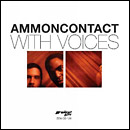
Ammoncontact - With Voices

Ammoncontact
With Voices
Ninja Tune, 2006

This is a collaboration between Carlos Nino and Fabian Ammon, who I gather are pretty involved in the LA music scene. The album is dedicated to J. Dilla, which speaks to the production style Ammoncontact are into – MPCs and trap kits, dubby sounds and soulful vamps. The record could work as an instrumental, arguably better, but I guess that’s the whole point of the “with voices” angle. And I salute the ambitiousness of it.

There are some pretty heavy medium-fi players on this album, including Daedelus, and Cut Chemist, as well as jazz outsider greats like Yusef Lateef. The best tracks put down a groove with oblique loops over top: asymmetrical rhymes, lopsided guitar parts, slightly non-conventional melodies. Aspects remind me of some nameless acid jazz stuff that Josh Neelands and Anthony James Peckover gave me years ago.

It’s difficult for me to feel entirely comfortable with songs that rhyme about the sun, moon, and stars and love and life and all that (“Beautiful Flowers” for example), so I admit to a certain aversion at times. But these elements are hit and miss; some lyrics work really well, and given how ridiculous hip hop can get sometimes I can get behind lines that preach positivity rather than blind consumerist pleasuring. Titles like “Elevation”, “Drum Riders”, and “Earth’s Children” (one of the best by the way, with a really subtle sample and kit combo) create an ‘all weed and dimmed lights’ vibe - in the very best sense. It’s an album that given the right setting, you can submerge into its thrubby darkness.

On the whole, the production on With Voices is pretty unreal. Great balance and dynamics, and a good mix between digital and live percussive sound. Each track feels like a short trip across an ever-changing, glitchy landscape, rough with digital grit. Recommended, but lyrical parts may be too sunshiny for the unprepared.

Monday, September 11, 2006

Black Turtleneck - Musical Chairs

Black Turtleneck
Musical Chairs
Normals Welcome, 2006

There is a mincing seriousness to this album, which makes their name a wry puzzle. There seems to be an element of poking fun at the humourless chin-scratching electronic crowd, while the band also steps right into some of the stereotypes they are mocking. Perhaps they’re just acknowledging the preciousness in electronic music that often emerges when vocals are involved. A slightly English sounding vocal part here, a single line drenched in delay there, suddenly its 1985 and your hair hurts from the gel.

Black Turtleneck is a collaboration of Jason Amm (of Solvent) taking care of synthesizers and programming, and Thomas Sinclair, who handles programming and vocal duties. In some ways they are very similar to Solvent, in the furry, vintage-synth sounds, video game bleeps and nostalgic step-sequenced stuffs, but the vocals add a different element. The vocals meet somewhere between New Order and Depeche Mode, but can also sometimes steer toward the more interesting and irregular stylings of Tarwater. The Black Turtleneck aesthetic is decidedly retro, and done with skill—suitable for those nights when it’s just you, your leather bodysuit, sulkiness and a half-bottle of dry sherry. Technocracy! Remorse! Drizzle!

Finally, Musical Chairs is an album of infinitely danceable music without requiring the thumping quarter-note bass attack you hear from every passing Civic, and the melodies are quite catchy to boot.

But again, I can’t be certain about whether the album is in homage to the 80s, or stuck in them, and that uncertainty makes this album one that’s spun selectively. When I’m really in the mood, and my bodysuit looks particularly maudlin without me.

Wednesday, May 17, 2006

A First View of "The Graveyard"


So, Matrix Magazine, who have been publishing my album reviews for some time now (under my real name and a few pseudonyms), and where I'd been the Music Review editor for awhile, have decided to give me my own column.

The Graveyard debuted in Matrix issue 74, and discussed the Exclaim Cup Hockey Tournament, and new albums by Destroyer and Raising the Fawn. Here it is in its entirety. I hope you enjoy it and pick up the next issue of Matrix.

I've just returned from 5 days in Toronto, having played in the Exclaim Cup Hockey Tournament--a tourney loosely (but gamely) organized around Exclaim Magazine and its community of ruffians. This was my seventh year in the tourney, playing with The Humiliation, a team of mostly West Coast ex-pats I started when I lived in Toronto. This year, we got sporty new track jackets, and our thumbs-down logo is emblazoned over my orange heart as I write this. We look awesome, in a Humiliating way.

I am clearly a big fan of the Exclaim Cup, and I marvel at its progression from a 2-team pond hockey game to a truly national, 30-team, 4-day extravaganza, rife with musicians and artists of all stripes. What I don’t understand, though, is why there’s such scant media coverage on the tournament, given our country’s obsession with all things hockey. It’s a tournament of colour and creativity, fair play and flair, and it stands in stark opposition to the tiresome controversies of big league sports. With each team gaining extra points for penalty-free games, supplying food to local food banks and instruments to youth-at-risk, and required to provide a solid 20 minutes of entertainment on stage or risk being tossed from the playoffs (and face condemnation by the rest of the teams), these games highlight what can happen when a bunch of creative people all do their part in a community setting.

Strangely though, most media coverage of this large, sprawling event tends to focus strictly on the involvement of the “superstars” of Lo- and Medium-Fi Canadian entertainment. Sloan’s Chris Murphy (a member of the Halifax-Dartmouth Ferries) appears in interviews and radio programs, the Rheostatics’ (and Morningstar defenseman) Dave Bidini appears on national TV talking about his new book about the tournament, and CBC’s George Strombolopolis (playing for the Chart Attack Hack) was featured in full-gear (minus gloves, oddly) on the cover of Eye Weekly during the Exclaim Cup weekend, despite having only played hockey for two years. Now, I have no issues in the least with these players talking about their involvement in a tournament they clearly love and respect, and each has just as much right to talk about the tourney as I do. What I am more concerned with is the media’s coverage of this expansive sporting weekend, which reduces it down to the participation of a few well-ish known individuals. If this is a tournament that, by its very nature, shuns the addition of ringers, why is the media coverage solely focused on celebrities, rather than the talented, sincere rabble of individuals that constitute each team? Let’s look at this in terms of music.

When we read about the membership of the New Pornographers, we tend to read about the involvement of alt-country crooner Neko Case, or pop craftsman A.C. Newman, rather than the lesser-recognized Dan Bejar, aka Destroyer. Likewise, when we read about Broken Social Scene, the numerous threads to members of Metric, Do Make Say Think or Stars are prominently displayed, while John Crossingham’s Raising the Fawn tends to be overlooked. While both Destroyer and Raising the Fawn could be considered less notable in the context of these sort-of-supergroups, each should be recognized in their own right, as both have recently made albums full of wonder, idiosyncrasies and intelligence.

Raising the Fawn’s newest album is called The Maginot Line (Sonic Unyon, 2006), named after the series of sub-terra fortresses erected by the French in World War II to protect their border from German invasion. However, despite the intense firepower in these French fortresses, the Maginot Line was easily defeated when the Germans simply drove their tanks up and around the fortresses’ cannon turrets, entering France through Belgium. Seems a fitting title for the newest Raising the Fawn album, given that its tremendous power, efficiency and undulating tension are qualities that could easily be ignored by music consumers due to the band’s fairly low profile. Hopefully small pieces like this will help broaden the band’s fan base, because for the last few years Raising the Fawn have been crafting some of the most mature and unpredictable music in the country. The Maginot Line forces the Raising the Fawn sound out somewhat, employing sustained feedback swells, falsetto vocals and the rolling thunder of floor toms to create a stormy work, dark and suggestive, then histrionic and emotive, then snapping back again. This album adds new elements such as Ebow and synthesizers to their traditional three-piece, to create a wintry album of fierce dynamics: howling, severe crashes buttressed against tiny, scraping burbles. If you have not had a chance to hear Raising the Fawn I highly recommend dedicating a week of your life to The Maginot Line; set yourself up in front of the band’s cannons on endless repeat, and let them pummel you into a melancholic submission. That shit will fuck you up.

On the other side of the scale we have Destroyer’s Rubies (Merge, 2006), a loose, rambling record of seemingly off-handed melody and wit. I remember first hearing Destroyer about ten years ago in a musty basement suite just off Commercial Drive in Vancouver. At that time, his work was really stripped down, and my impression was that he was trying too hard to be weird. Now, however, Destroyer has a full group around him, and seems to have hit his stride as a songwriter, ably weaving casual vocals over what are clearly deliberately chosen motifs. There’s an idiosyncratic balance of humour and seriousness here, in the lyrics, vocals and musicianship on this album, and I find it refreshing because of how solidly it sits in the rock tradition. Reminiscent of Dylan’s early electric period, Destroyer’s Rubies features 1960s-esque honky-tonk pianos and simple, driving rhythms around vocals with lyrics often tightly packed into verses—as if the ideas are coming too fast for Dan Bejar to fully realize in the set verse length. This is an album where the lyrics matter, a revitalizing switch from so many records that just build a hook over a phrase and repeat ad nauseam. Destroyer’s Rubies is a record that is deceptive in its intentions, wanting to both grab you buy the lapels and compel you to listen, while forcing you away with some rather heavy subject matter. Many people I speak to are unsure of this album because of Bejar’s (nasal, odd) voice, however, I’ve found that once you are acclimated to his vocal style, this album stands up on so many levels and marks a significant work by a talented artist just hitting his full potential. Perhaps Destroyer’s Rubies could be considered a great summer album, if you hope to have a very strange, somewhat unsettling summer.

Both The Maginot Line and Destroyer’s Rubies represent somewhat hidden gems found in the larger collectives of musicians known as Broken Social Scene and the New Pornographers. Much as how the Exclaim Cup Tournament is becoming known as a result of media attention paid toward a few of the better-known, hockey playing celebrities on the ice, Raising the Fawn and Destroyer can hopefully begin to enjoy some media coverage due to their own associations with their better-known collaborators. But make no mistake, Destroyer and Raising the Fawn are significant acts in their own right, unique, creative and worthy of their own praise. If you have not heard either group, I recommend you seek them out, and experience another two pieces in what could be called a renaissance in Canadian music.
(from Matrix Magazine Issue 74)

Sunday, January 01, 2006

Monks, malts & Montréal: Can making beer & cheese be holy? Trappist monks think so

Photo by Stefan Schmuhl

Article from ascent magazine, Issue 28 (excerpt on ascent site)
Monks, malts & Montréal: Can making beer & cheese be holy? Trappist monks think so
By Scott W. Gray January 2006

In 1869, American author Harriet Beecher Stowe had this to say of Montréal:
“Montréal is a mountain of churches. Every shade and form of faith is here well represented in wood or stone, and the gospel feast set forth in every form and shape [will] suit the spiritual appetite of all inquirers.”To that end, I am sitting down in my Montréal apartment to satisfy my own appetite, with a lunch steeped in spiritual history: Oka cheese and a bottle of Chimay Grande Reserve beer, both crafted by Trappist monks. These foods follow a tradition passed down from brother to brother and perfected over several centuries in cloistered, reflective communities. I spread the cheese onto a fresh baguette and wash it down with some peppery beer, all the while hearing – I kid you not – the tintinnabulations of church bells filling the autumn air. It is an incidence of strange serendipity, but indeed typical of any Saturday afternoon in Montréal.

The park across the street is teeming with life, the sun is high and clean and a cool autumn wind – foreshadowing, always, the winter to come – blows across streets and buildings, and off in the distance the bells of a church peal and reverberate through the area. If you were to climb any of the city’s numerous and prominent wrought-iron fire escapes for a look around, you would probably be most struck by the conspicuous number of church spires dividing up rows of aging brownstones and factories. Every block or so, another set of double spires creates a landmark for this city’s devout communities.

If you were to remain on your fire escape and look west, you would see Mont-Royal – the city’s famous landmark – ornamented with the enormous cross that looks down upon this extraordinary city. Sailors who met stormy seas in the St. Lawrence Seaway and were in danger of shipwreck erected this cross in 1645. Praying for their safe passage, they made a pact that if they should be spared, by God’s graces, they would erect a cross on the highest peak they found to reflect their salvation for years to come. Those of us living in Montréal today still live under the gaze of this cross, ever aware of the presence of God, if the churches, mosques and synagogues on nearly every street corner were not reminder enough. In 1881, Mark Twain said that visiting Montréal was “the first time [he] was ever in a city where you couldn’t throw a brick without breaking a church window,” and many of the same churches exist today.

Back at my kitchen table, lunch continues. The Oka cheese is a whitish-yellow wedge with a crust of dusty orange. The label shows its unusual origin, with a drawing of the La Trappe monastery in Oka, Quebec, and a small diamond saying: depuis 1863. This is a soft, surface-ripened cheese, with a crumbly orange skin around its edge. It smells of old wood – a little musty, but not unpleasant and certainly not as pungent as some cheeses I’ve had since moving to Montréal. Oka is surprisingly subtle, tasting creamy without any sharpness on the upper palate, and lingers in the throat. It is a cheese that is distinctive and proud without being overly forceful, and I cannot help thinking that this reflects the monks who craft it.

While the cheese made by these monks is well respected, Trappist beer is created with such care and skill it has vaulted into a prominence out of step with supply, and I think out of step with the humility of its brewers. There are only six official Trappist breweries in the world (five in Belgium and one in the Netherlands), yet their products are sought the world over. To retain the title of “Trappist beer” these six breweries must follow three rules: that the beer be brewed in a Trappist abbey or directed by Trappist monks; that income from the brewery be used for charitable work and not for the abbey’s profit; that the monks retain control of the brewery, its brewing choices and decision-making.

Dedicated to a life of work in the service of God, monks live in keeping with rules set out by St. Benedict, considered the father of all Christian monks. St. Benedict’s book of seventy-three chapters (known colloquially as St. Benedict’s Rule, but more formally as Regula Monachorum, Regula Benedicti) governs Christian monasteries, stating among other precepts that a monastery should produce everything it needs to survive. Chapter 48 says that, “you are only really a monk when you live from the work of your hands,” so the monks dedicate every day to prayer and manual labour. However, this dedication to labour and prayer was subject to some interpretation. In 1666, around the same time as the cross was erected on Mont-Royal, in fact, the Cistercian order of monks divided into two camps, based on “mitigated” or more casual observance of monastic duties, and “strict observance” of monastic duties. The monks who adhered to strict observance were the Trappists.

Every day the Trappist monks alternate seven prayer sessions with work such as cooking and cleaning, tending gardens, crafting beer, or selling the beer and other wares they’ve made. Trappists are known for these handcrafted goods, offering to the lay public cheese, wine and liquor, beer, soap, children’s clothing, and vegetables they’ve grown, mostly for the communities around the abbey. The aim of the Trappist monks, like so many spiritual renunciates in so many different traditions, is to be a living vessel of the Godhead. Ascetic and humble in lifestyle, living in a community of chastity and poverty, the Trappists dedicate themselves to prayer, and aim to elevate their work to the level of prayer – a concept that some of us may know as Seva, or Karma Yoga. It is a simple life that has remained largely unchanged since the seventeenth century. The centuries that have passed have given the Trappist abbeys time to hone the harvest of their work, and develop beers that are unsurpassed in quality. These products represent the spiritual service of the monks, and are sold solely to sustain the abbey and its inhabitants, and raise money for charitable work.

However, in today’s world, and our culture of gratification (often regardless of cost), the monks are finding their products to be in much greater demand than they can meet. The internet has brought new “specialty beer” connoisseurs into existence, and created a portal where, generally speaking, consumerism reigns.

In June 2005, a Trappist beer from the St. Sixtus monastery in Westvleteren was voted the finest beer in the world by an internet site dedicated to beer (www.ratebeer.com). The site’s survey featured thousands of votes from beer aficionados from sixty-five countries, and St. Sixtus’ Westvleteren 120 emerged ranked first. It is created in a small abbey, home to thirty monks, and primarily available only to those who visit this cloistered Belgian community. Faced with a sudden interest in their beer and facing more demand than they could meet, the Trappists of Westvleteren ignored the rules of the market and refused to boost production of their Westvleteren 120. They simply sold all the beer they had already brewed, and prepared for next year, as they and the fathers before them have done for many years. But it is interesting to note that this is not an anti-consumerist move, or a rejection of the market; it is simply a choice in priorities.

The father abbot of Westvleteren has said, “We are not brewers, we are monks. We brew beer to be able to afford being monks.” Rather than become a brewery run by monks, the brothers at Westvleteren chose to remain monks who brew beer, a choice that emphasizes the supreme objective of every monk: a life of prayer. To cater to the demands of the market would, in some ways, show too great a reverence for this world, and risk missing the overarching goal of the Trappists. After all, they didn’t become monks to make money.

Sitting here at my kitchen table, I can’t help but be struck by the disconnect between the world I see around me, and the Trappist monasteries that made my lunch. It seems as if anything, even the most sacred, can be bought for a price. Montréal’s churches experience declining numbers of parishioners as a generation ages, and increasingly churches are sold to private developers. Most conspicuous to me are the condominiums in Montréal’s Little Italy, which feature upscale apartments for sale inside the church itself. The fact that I could even buy a Trappist beer from Belgium in a small liquor store in Montréal seems odd to me, but I am not immune to taking it for granted. While Chimay is a wonderful beer conveniently located at a store in my city, I have to admit to feeling affronted by the fact I couldn’t just walk out and buy a bottle of Westvleteren 120. By these standards the Chimay – which is the spiritual yield of men who have given their lives to God – is not good enough for me, the consumer. Perhaps I need to take a page out of the Trappists’ book and be satisfied by simpler, more spiritual things in life.

I pour another portion of the dark Chimay ale into a large wineglass, as per the bottle’s instructions, and see its malty colour and white, foamy head. It smells like dusty fruit, and tastes at first of caramel and pepper. It is fruity and sweet on the tongue, but the taste changes as it stays in the mouth, giving off hints of orange and coffee, and finally malt in the back of the throat. I spread more Oka cheese onto a fresh slice of baguette, take a sip of beer, and listen to the church bells echoing amongst the double spires on this typical Saturday afternoon. Soon enough the snow will blanket the city and fill it with a profound winter quiet, as if we are all ensconced in a cloistered community under the cross on Mont-Royal. But for today it is enough to be thankful for the simple products of a life of prayer and faith, in a humble apartment, under a clear autumn sun.

Thursday, March 31, 2005

They Just Need Some Space

They Just Need Some Space


Alternative performance venues are fostering tight-knit communities and contributing to the artistic diversity of the city

SCOTT W. GRAY, Freelance

Published in the Montreal Gazette: August 2, 2007

Clinton the cat has just returned from a traumatic visit to the veterinarian, and his human caretakers, Sarah Byrnes and Michelle Williams, make sure I am gentle with him as they welcome me into their home.

They live at St. Laurent Blvd. and Prince Arthur St. in a building full of converted studios, in a long loft that boasts a typical urban domesticity - except that it regularly doubles as the art venue and performance space known as My Hero Gallery.

The two women established My Hero last year to offer emerging visual artists a place to display their work outside the traditional gallery spaces of the city, and to foster community.

"There's so much energy in this city toward independent music," Byrnes says. "I wanted to take that energy and combine it with art. This gallery is about merging art and music together and then getting that energy to be fun."

"We wanted to use the space." Williams continues. "We wanted to do something that interested both of us - being that Sarah could curate art shows and I could do music shows once in a while."

The two women praise the community that develops around the events they host in this unusual performance space. Every month they welcome strangers into their home, charging no admission and operating on a BYOB bar policy to showcase talent they believe in.

"Smaller venues create communities," Byrnes says. "An intimate show is priceless. Going to a show where you are close to the band and you are interacting with them as they are interacting with you - it's something that's memorable. It moves you."

In fact, the idea of providing a space for community to gather, whether physically or virtually, recurs frequently when discussing Montreal's alternative performance spaces with their curators.

Emmanuel Madan and his colleague Thomas McIntosh (known collectively as The User) are the creative force behind the Silophone in Montreal's Old Port. The Silophone uses recording and playback equipment installed in an enormous, empty grain silo built on the Lachine Canal in 1903. The project was designed to allow audiences to explore the natural acoustics of this abandoned space, albeit from a distance.

The public can send files across the Internet, speak across a phone line, or use the "Sonic Observatory" (a permanent installation The User has built on the boardwalk of the Old Port) to hear their voices reverberating inside the giant metal grain silo.

"When we got access, what we wanted to do was bring the public inside because it's such an amazing space," Madan says. "The thing that we were attracted to when we first explored the building was what it sounds like inside. But, unsurprisingly, the Old Port wouldn't allow the general public in. So, what we chose to do instead was bring the acoustics of the space outside to people in other places."

Audio files are uploaded to The Silophone's website, www.silophone.net, from all over the world, and remain there for others to play back through the space. By adding files to the sound bank, audiences can participate in the Silophone's international community.

Madan says that we turn to non-traditional venues for culture because the number of "conventional spaces where people can play and gather" is limited.

"Not to say there aren't concert spaces in Montreal," he says, "but for a certain kind of music and art, I think that you see a lot of marginal spaces being reclaimed because there are a lot of those spaces."

Guy Sprung is a firm believer in community gathering spaces. His theatre company, Infinitheatre, operates out of the converted Bain St. Michel at Maguire and St. Dominique Sts., a space that was initially the community bathhouse when it was built in 1911.

As we speak, Sprung shows me renovation plans for the pool, adjusting various pieces in a cardboard mock-up of the Bain St. Michel that is sitting on his desk. With a movement of his hand, the building's interior is exposed, and a tiny stage is neatly fitted into the pool's deep end.

Relying on three-month contracts from the city to stage performances, and facing the realities of an aging building, the converted Bain St. Michel operates on a fairly provisional lease. However, Sprung is undaunted by the challenges.

"I think it's amazingly flexible and the idea of it redefining itself as a community gathering place is so neat," he says. "This would have an edge - you would walk in and your mindset would be shifted and you would maybe see things from a different perspective.

"It goes back to something, you know," Sprung adds, carefully putting the roof back on the cardboard model of the pool. "It would be the area's little gathering point for the community."

For information on My Hero Gallery, go to http://www.myherogallery.ca/. For the Silophone, go to http://www.silophone.net/. For Infinitheatre, go to http://www.infinitheatre.com/.


photo by dave sidaway - for the gazette

Monday, March 28, 2005

Thinking Globally, Dancing Locally

Dubstep nights have brought the bass-heavy sounds of South London to Montreal, where the music has found an appreciative audience for all its emerging styles

SCOTT W. GRAY
Special to the Gazette

Published: Thursday, June 14, 2007

Everything is dark and clammy, your extremities are vibrating and there is a deep, constricting pressure across your chest. Maybe you're disoriented, sweating or unable to locate the source of the throbbing in your muscles.

These are either the first signs of cardiac arrest, or you are experiencing dubstep - a dark electronic music that has emerged in recent years out of England. Initially thought to be specific to the gritty south London neighbourhoods that spawned it, dubstep has expanded outward and taken root in Montreal, as well as in other international cities, picking up influences and audience momentum along the way.

There is some agreement on what constitutes dubstep. Based loosely on a combination of Jamaican dub, UK 2-step and electronic garage music, dubstep is usually mid-tempo, featuring reverb-heavy, syncopated percussion over an impossibly low sub-bass that is more of a physical force than an actual sound.

At a recent dubstep night during the Mutek electronic music festival, I experienced sub-bass frequencies so powerful they actually vibrated my glasses down my nose, and I watched beer cups shimmy off of speaker cabinets. High frequencies ping-pong and whir around the listener, while deep shots drive the songs forward, echoing out with increasing intensity and heaviness.

Dubstep nights are popping up all over town. With DJ sets at Main Hall, Kop Shop, Academy or L'Escogriffe, the dubstep scene is vibrant and growing. Early in the night, events are populated by sparse crowds of die-hard dubstep fans, nodding along to the fractured tracks the DJ features.

As the night progresses, crowds from different scenes begin filing in - dancers, deep listeners and even just the curious - checking out music that draws influence from diverse record collections. Each dubstep night is subject to the quality of the sound system available, but in my experience, all share audiences with positive energy and enthusiasm for this sparse, unusual music.

Traditionally, electronic music thrives on tight definitions, subdividing various genres into micro-genres based on very specific criteria. Thus far, dubstep has eschewed such rigid parameters and adopted a more inclusive perspective, pulling in influences from a variety of different musical styles. This reaction against a formula to define dubstep has helped generate new producers, promoters and audiences globally, linked together by the internet.

Montreal dubstep promoters Nick and Matthew Burton (aka: Hosta and Komodo, respectively) are drawn to this inclusive aspect of dubstep, evidenced by the sets they play, and by Matthew's compositions that place didgeridoo and Arabian flute over the music.

"It's amazing what we've seen in the last couple of years," Nick says. "We've seen so much growth and diversity, and different flavours - there's the techno aspect, the hip-hop side, the half-step influence, the Middle Eastern influence. As far as I can tell, compared to other scenes, this is unique because in about a year this has all splintered off. To me, that's dubstep. It's just ... everything."

"And yet," his brother Matthew adds, "people are all still willing to call it dubstep. I think what's exciting about the dubstep scene is that we're at the beginning of it now. What's most exciting to me is that idea of anything goes. Ninety per cent of the people that come out to our nights don't know that this is dubstep. They just know they're enjoying it."

As local dubstep DJ nights or the recent dubstep-heavy events at the Mutek festival may evidence, the music has an all-encompassing breadth that attracts new fans across the musical spectrum. Montreal producer and promoter Smile Germeil (aka Intoccabile), has seen audiences enjoying the music even as producers are struggling with its boundaries.

"I think at the moment dubstep producers and listeners don't really know what dubstep is. It's like we're working, trying to define (it) by our output," he says. "I was kind of one of the first guys to talk about and promote dubstep in Montreal, because we felt like if we didn't do anything (it) would just die off. So that's why we took it upon ourselves to do everything - release material, throw jams, inform the public about these new, emerging styles. And it's exploding right now. It's crazy."

Dubstep DJ Philippe Aubin-Dionne (aka Thehovsep) concurs. "I played this track last night and it just blew up. Everyone looked at me - just opened their eyes and went 'What's going on?' I am really thankful that I was able to discover this music, and put on nights. You know we recently had two dubstep nights in Montreal on the same night? It's amazing that something that's so central to this suburb of London would go on to have two nights at once on the other side of the ocean."

"Now, with the Internet," he says, "nothing can remain local."

The dubstep night Komodo Dubs is held the first Thursday of every month at Academy Club, 4445 St. Laurent Blvd. The next event is July 5.

photo by phil carpenter for the gazette

Sunday, March 27, 2005

Wednesday, September 01, 2004

The Graveyard in Matrix - September 2006

The Graveyard - by Scott W. Gray
September 2006


Announcements about the Echo and Polaris prizes came to me around the time I was writing this issue’s piece, and I must say I’m pleased that independent artists are finally being recognized on their merits. Both of these prizes are juried by media flacks and awarded for songwriting, rather than unit sales, genre, or sculpted, muscular booties.

As these prizes recognize, there is an abundance of great bands in this country. There always has been, of course, but history shows that groups die out due to a lack of exposure and subsequent financial problems. Recording and distributing an album (not to mention touring a country of this size) is expensive. The Canadian industry has grown up a lot, market economics have changed a bit in the digital world, and there’s now a real possibility for independent bands to be reasonably successful here.

Exposure, however, still means everything to this process, and I can support anything (like the Polaris and Echo prizes, odd blogs, etc.) that shines the spotlight on the great talent here. With this in mind, here are songs by five artists that were in regular rotation on the Graveyard stereo over the last few months. I urge you check them out.

Christine Fellows: When I first heard Mary Margaret O’Hara’s “Body’s In Trouble” I stopped dead in my tracks, my thin teenage shoulders pulled up like I expected a crash behind me. Utterly arresting, disquieting, and inimitable. Christine Fellow’s song “Vertebrae”, from her Paper Anniversary album (Six Shooter), has much the same quality. It’s an exercise in restraint and tense understatement. Excellent musicianship (particularly from the strings and percussion) accompanies a voice that’s clear in the upper register and slightly frayed in the middle tones. Warm electric piano sounds and cello sweeps trail out over not-as-goofy-as-you’d-expect glockenspiels. If you think she’s prodigiously talented when she says, “I am deadfall. Deadfall,” then wait for the chorus. One of the most startling albums I’ve heard recently.

The Besnard Lakes: From Besnard Lakes’ yet-to-be-released album Dark Horse Transmissions, I spent a good deal of time listening to “Ride the Rails”. This new Besnards album (to be released on Jagjaguwar this fall) is considerably more orchestrated than Volume I, their previous release, with strings, choir-like vocals, and field recordings that jackknife into the arrangements against the Besnards’ signature guitars (high-volume, dive-bombing). “Ride the Rails” displays their development: essentially two songs in one that pivot on a single guitar riff nearly two minutes in, “Ride the Rails” features members of Bell Orchestre complimenting a very-70s mood piece that shifts into a solemn but hooky chorus drenched in reverbed vocals. As well, the vocals on the new album are stronger than in the past, offering more confident deliveries and tighter harmonies. If Volume I was the Besnard Lakes’ Loveless, then Dark Horse Transmissions is their Pet Sounds.

Islands: Formed from the brittle little bones of the Unicorns, Islands emerged in 2006 with Return to the Sea (Equator Records). Full of some of the smartest dumb pop you’ve ever heard, this is the sort of album that ends up in endless repeat because you hum it to yourself for hours after hearing it. The track that stuck with me most was “Rough Gem” (though “Don’t Call Me Whitney, Bobby” was a very close second), with its ‘Come On Eileen’ melody, tiny pizzicato string breaks, and tight but not flashy drums, this song left me scratching my head and pumping my fist. As an added touch, I like hearing Nick Diamonds singing about diamonds.

World Provider: What most music writers will tell you (over beers that you will have to pay for) is that a great deal of material arrives for review that sounds just like everything else, even among the non-mainstream albums out there. But nothing really sounds like World Provider’s Lost Illusions (out on Ta-Da). You can draw associations among the art-rock bands that he could be referencing (Devo, for example) but it takes a very strange sensibility to put them together as World Provider does. Strange tastes, oddly unsettling. The most successful songs on Lost Illusions follow a synth driven melodic lead, with interesting vocal harmonic lines – sometimes manipulated digitally – and very simple snare-kick, hat-handclap percussion. “Valentine” made onto my mix discs and took me through most of this summer. Featuring a guest appearance by Leslie Feist, “Valentine” merges a loping, neo-country vocal twang over fuzzy electro in a surprisingly effective way. Sneaks up on you, then bam, you have a weird moustache and you’re dancing in unfamiliar clothes.

Bell Orchestre: Bell Orchestre’s stunning instrumental debut album Recording a Tape in the Colour of the Light (released on Rough Trade in late 2005) is a roiling weird of french-horns, violins and trumpets that I listened to all spring. I was impressed by the subtlety and interplay between the instruments on quieter tracks, but I was unprepared for the way “The Upward March” rocked out. Built over a very simple digital click, the band adds textures and colours to create a piece that by its end is locked in a solid groove, while still tearing against itself. A sort of hyphen band (i.e.: post-rock, or math-rock, or classically-inspired, all of which apply), Bell Orchestre create pieces rather than songs, but there’s a vitality to them all that keep them fresh and unpretentious. Long, murmuring drones open out to raucous crashes and stabbing horns; the music is a stormy affair. “The Upward March” is probably the most luminous and anthemic on the album, so it’s an obvious repeater on the ipod, but the album as a whole creates a mood worth pursuing.

With independent Canadian talent increasingly being recognized by labels and media (and ugh…”tastemakers”) outside the country, listeners here deserve to know what that faint buzz is about. If you haven’t heard the five albums above, or any of the finalists in the prizes I’ve mentioned, I recommend tracking them all down. Each artist is unique but they share some strange commonalities - quirkiness, a sort of optimistic sadness, rich, idiosyncratic songwriting, and ultimately, independence.

To read more about artists like these, or random stuffs, check out the blog - Urban Camouflage: http://urbancamouflage.blogspot.com/. See you there, or in the Graveyard next time.

Sunday, August 01, 2004

The Graveyard in Matrix - August 2007

The Graveyard - by Scott W. Gray
August 2007

Music and filmmaking have enjoyed a symbiotic relationship for many years. When I think about the scenes I most remember from films, often the music in the scene figures as prominently in my memory. I don’t think Apocalypse Now would be the same film without the inclusion of the Doors “The End” or Wagner’s “Charge of the Light Brigade”. Chas Tenenbaum’s attempted suicide in The Royal Tenenbaums is now absolutely tied to Elliott Smith’s “Needle in the Hay”, and it is very hard to think of Simon & Garfunkle’s “The Sound of Silence” without remembering the final scene in The Graduate (incidentally, I have read that The Graduate was the first film to utilize music to specifically connect scenes).

Obviously there have been official soundtracks to movies released commercially since the 1950s, and in the 1990s we saw many mainstream releases of music “inspired by” a film’s soundtrack (essentially releasing several albums of material for one movie), taking soundtracks to a ridiculous, self-aware and self-serving level.

Cinematic music, however, can be thought of as different from an official soundtrack simply because it is unconnected to a specific film. It merely suggests filmic scenes in the mind of the listener. In a sense, when coupled with headphones and portable players, cinematic music is the soundtrack or score to your life in real time.

The evolution of abstract electronic and post-rock music over the years, as well as the growing appeal of instrumental hip hop (credited in some circles to the popularity DJ Shadow’s 1996 Endtroducing album) has brought the concept of cinematic music to another level. Artists of all stripes have begun forging albums that play with combinations of disparate genres, rely more heavily on tone and texture than melody and harmony, and seek to convey a larger vision in their albums. The evolution of sample-culture has perhaps made the relationship between film and music slightly more parasitic than perfectly symbiotic, as many artists make cinematic tracks that sample directly from cinema; however, even these releases are meant to be non-specific soundtracks, intended to create a new work from existing works.

In celebration of this issue’s theme of filmmaking, I decided to write about some of the more cinematic releases I’ve heard in the last few months. All three are excellent, Canadian releases, and to varying degrees present a cinematic form of songwriting.

Handsome Furs – Plague Park (Sub Pop, 2007): Dan Boeckner is best known as one half of Wolf Parade’s vocal tandem. In Handsome Furs, his work with wife Alexei Perry, we are treated to a more direct expression of his unique songwriting skills. The songs on Plague Park speak of alienation, regret and the darker sides of human personality and are all delivered in Boeckner’s trademark tenor – a voice that makes up for its lack of range by conveying the full-spectrum of emotion. Plague Park is cinematic in how it evolves; consistently hinting at a deeper, non-revealed storyline (apparently Plague Park is a mass grave-cum city park in Finland), and the album remains restrained just-inside a complete emotional collapse. It is tense and tender, bristling and sophisticated, without being heavy-handed or histrionic. Despite the darkness, Plague Park comes highly recommended.

Sixtoo – Jackals and Vipers in the Envy of Man (Ninja Tune, 2007): Sixtoo’s Jackals and Vipers in the Envy of Man is a rugged, cut-up album of instrumental hip hop, released on the venerable Ninja Tune label. Best known for his tough, downtempo beats and crunchy production, Sixtoo (born Vaughn Robert Squire) has crafted an album that evokes a dark, moody aesthetic from the opening notes that continues throughout. Jackals is a film-noir type of release, featuring thirteen unnamed tracks compiled from various live performances, stitched together to present dark shadows and melancholy. At his best, Sixtoo shifts between warmth and frigidity, displaying a head-nodding muscularity and obsession with texture, evoking images in the mind of the listener. Jackals builds on Sixtoo’s reputation as a top-flight producer, and offers the listener an excursion into the dirty urbane – back alleys and fire escapes, rainy streets and neon signs. It is an album very much worth investigating.

A Northern Chorus – The Millions Too Many (Sonic Unyon, 2007): Seemingly one of Canada’s least-recognized aural juggernauts returns with The Millions Too Many. While not a post-rock album specifically, A Northern Chorus have crafted an intricate, multi-layered album of strings and rolling syncopation that certainly pushes at rock’s ragged edge. In this album there are wide landscapes and rugged train yards, lakes and lightening storms. Surprisingly, The Millions Too Many is A Northern Chorus’ most-accessible album to date, yet still relies on severe dynamic change-ups, extended violin and cello passages, reverberating slide guitar, and intimate male-female vocal harmonies. Like instrumental groups such as Explosions in the Sky, and (Toronto’s) Do Make Say Think, A Northern Chorus crafts a cinematic music that is mostly consonant, replete with crashing cymbals over major chord passages; however, it is in the quieter moments that the group build their substance, best display their artistry and provide the soundtrack to any listener’s concealed sense of optimism. This is a uniquely Canadian album reminding me at times of Lenny Breau, the Rheostatics and the Wooden Stars, without sounding derivative of anyone else. The energy that A Northern Chorus conveys in their live performances has finally been captured on The Millions Too Many by Holy Fuck member Graham Walsh, and it is an album you deserve to hear.

For those of you interested in reading more about how music and film interrelate, I suggest you read my Graveyard column in the last issue of Matrix (issue 77), exploring the best in music documentaries.

Or, to read more about music of this sort, you can always visit the Urban Camouflage blog (http://urbancamouflage.blogspot.com/). See you next time in the Graveyard.

Saturday, May 01, 2004

The Graveyard in Matrix - May 2007

The Graveyard - By Scott W. Gray
May 2007


Writing about music documentaries is like dancing about a film about architecture. However, over the last few months I have watched close to two dozen music documentaries and several warrant discussion. While none of the films listed below rival my all-time favourites (such as Martin Scorsese’s The Last Waltz, recording the final performance by The Band, or Stop Making Sense, which is essentially a Talking Heads concert film), the five films I’ve listed offer insight into the creative spirit, and empathy for musicians who are often the victims of themselves and conditions they engender. I recommend you see each of the films listed below.

Gimme Shelter (1970), by Albert and David Maysles. The death of the 60s is often accredited to the Rolling Stones’ concert at the Altamont Speedway in San Francisco. This free concert, meant to be a successor to Woodstock, brought tens of thousands of music fans to an inadequately equipped outdoor venue, and became disastrously policed by the Hell’s Angels who were hired as security. The result was a “very uncool” time, resulting in the stabbing death of one attendee, and countless beatings of others at the hands of the Hell’s. Growing up a Record Store Snob (to be kind) I had heard the Altamont story, but seeing the Maysles’ documentary showed me how little I actually knew about the concert at Altamont. The film utilizes a slightly fractured narrative, showing first the events Altamont is most known for, and then showing the long lead-up (including most of the Stones’ tremendous set) to those famous moments. The filmmakers also interject scenes of the Rolling Stones in the film’s editing room, watching the raw footage from the concert for the first time, offering a unique perspective on the whole disaster. Gimme Shelter is probably one of the greatest music documentaries of all time because like all great documentaries, it shows so much more than only what is on film.

Be Here to Love Me: A Film About Townes Van Zandt (2005), by Margaret Brown. This film tracks the (so-called) rise and precipitous fall of Townes Van Zandt, one of the few “songwriter’s songwriter” chosen by actual songwriters (including Steve Earle, Emmylou Harris, Willie Nelson, an extremely manic Kris Kristofferson, and strangely, Steve Shelley of Sonic Youth). We follow Townes Van Zandt’s booze-, drug-, and finally shock-therapy-laden career as he becomes the most respected but least known songwriter outside of Nashville. This is an absolute heartbreaker of a film, but one that vibrates along the slender nerve of an artist’s troubled creativity. It is inspiring to watch a musician put his artistry above everything else in his life, but it is ultimately tragic to watch as his personal demons find him again and again in the process.

loudQUIETloud: A Film About the Pixies (2006), by Steven Cantor (who also made “Of What Remains” about Sally Mann) and Matthew Galkin. This documentary follows the Pixies’ 2004 reunion tour, and reveals some of the internal workings of one of the most important and famously dysfunctional indierock bands ever. It is rumoured the singer broke up the band by faxing the other members – now they’ve had therapy, are in rehab or raising families, and are back on tour after an 11 year disbandment. Of course, in that span of time the band’s maximum impact has been felt, with legions of bands being inspired by (read: blatantly stealing) the band’s sound, and many new Pixies fans reaching puberty and discovering the albums in their older sibling’s wake. It becomes evident early in the film that the band really does not understand how influential they are, and loudQUIETloud presents the Pixies as they grapple with addiction, their reputation, and most critically, each other.

Fearless Freaks (2005), by Bradley Beesley. Fearless Freaks is a documentary about the Flaming Lips, now in the late stages of their prolific, exceptionally weird, career. The film does a good job of giving the Lips’ overview, bringing a series of great albums to new fans, and bringing insight and understanding to long time listeners. Essentially coming from dirty blue collar (sometimes: no collar) backgrounds, the film follows the three remaining members of the group through the highs and (near-constant) lows of band member turnover, financial ruin and most notably, drug dependency. Watching Fearless Freaks, I found myself laughing at the band’s idiosyncrasies, but also feeling empathy for a group that has only endeavoured to be unique unto themselves, often to the detriment of their commercial success. This is a worthwhile documentary because it gives an unblinking view of the rock and roll lifestyle, from the point of view of guys whose circumstances and creativity offered no other choice than to pursue it.

Metallica: Some Kind of Monster (2004), by Joe Berlinger and Bruce Sinofsky. This documentary tracks Metallica in 2001 through 2003, as they try to record a new album (which becomes St. Anger), find a new bass player (which becomes former Suicidal Tendencies bassist Robert Trujillo), and not be complete dicks (which becomes impossible, clearly). Incongruously, the group solicits the help of a professional therapist, consistently clothed in tan Cosby sweaters, to help them work out their professional and personal differences. The therapist adds a performance-art level of surprise to an already extravagant rock band burnout, and we watch a group that ordinarily tightly controls its empire (witness: Napster lawsuit) have no choice but to yield to talking about their very un-metal feelings in the camera’s omnipresence. Metallica’s aging band members have hundreds of acres of ranch land, literally millions of dollars in the bank, priceless contemporary art, unparalleled support from their fans, and yet ironically it seems its because of these privileges that they are unable to communicate anything (creatively or otherwise) of real substance to each other. This is a phenomenal film whether you are a Metallica fan or not (I am not, particularly), as the unguarded vantage point offers a fascinating, non-sentimental insight into all of rock and roll’s royalty, via the example of this band. Plus, great footage of some seriously heavyweight bass players.

Have a great summer, getting your doggone doc on. See you next time in The Graveyard (or visit online at http://urbancamouflage.blogspot.com/).

Thursday, January 01, 2004

The Graveyard in Matrix - January 2007

The Graveyard - by Scott W. Gray
January 2007


I recently began re-reading A Year with Swollen Appendices – Brian Eno’s diary from the year 1995. The end of the book, the appendices, in fact, features a few of Eno’s essays – most notably ‘Ambient Music’, written in 1996 as an explanation of the thought process behind his seminal album Music for Airports. In ‘Ambient Music’, Eno suggests that a viable music for the future would offer a soundtrack, of sorts, for every situation.

His idea was for a music designed to incorporate the sounds of the environment it is played in, blurring the line between accidental, ambient noise and recorded sound design. It was what he said would be an ideal music, one that offered “a place, a feeling, an all-around tint to the sonic environment”. His inspiration came while standing in the Cologne airport, and he envisioned compositions that played throughout the building, but that left room for the tempo and frequency range of the human voice to allow for airport announcements to filter into the immersive music.

The development of technology and advent of the portable music player (whether cassette, CD or MP3) has brought this immersive soundtrack idea to a really individual level, as we all know. One of the clearest memories I have involved a long taxi ride from the airport through a rainstorm, while listening to Vangelis’ Bladerunner soundtrack. I kept the volume low so I could still hear the engine noise, the traffic in the rain, and random bursts of cabbie-speak from the CB radio, between the synth-swells. It was an exercise that established a noir, futuristic mood for me (strangely also connected to airports) that carried over into apartment. I felt like I should have been slipping into a modular sci-fi bubblehome with sleek plastic surfaces and rounded corners, but instead I was just flopping into a rather grotty three-and-a-half in a neighbourhood full of junkies and meth addicts. I have since moved, but the personal soundtrack idea stays with me.

These days I’ve been making playlists on the iPod to dovetail with my Metro ride to work and around town. Which playlist gets chosen usually depends on the mood I am in or the mood I am trying to create. On these wintry mornings, the most affecting stuff is minimalist, sparse instrumental music that blends the ambient noise of the Metro (such as the train sounds, but also the wind, conversations between commuters, and station announcements) or the city (crowds, kids, traffic, announcements from stores) into the music. Most fitting, I have found lately, is the work of Mexican electronic musician Murcof, and US artist EdIT.

Murcof (Tijuana native, Fernando Corona) creates sparse but engaging glitch-based compositions that often sample from 20th century composers such as Arvo Part and Henryk Gorecki. The result is decidedly downtempo, but has enough texture to remain stimulating. His music offers orchestral samples that pull against silence and microtextural elements – landscapes of near-silences that fall outside the usual musical categories such as melody or rhythm, and yet infuse the music with sounds that become invaluable to the finished piece. I find myself making onomatopoeic gurgles in syncopation with the tracks, picking up on the small details. These are often the elements that blend most seamlessly with the context I am in while listening; I lose track of where the subway or city sounds end and song structures begin. I enjoy the peculiar confusion of not knowing how much of what I am hearing is built into the pieces and how much is environmental. The Murcof material that I have is out on the Leaf Label, and albums like 2005’s Remembranza put some smarts back into the much-maligned ambient electronic art form.

Along the same lines, but certainly busier, is Los Angeles’ EdIT (aka Edward Ma). I sort of stumbled across his 2004 album Crying Over Pros for No Reason one day by searching online and spiralling into the seemingly endless micro-genres of electronic music, where individual artists (and sometimes just tracks), apparently warrant genre names of their own. The sub-category that brought EdIT to my attention is the unfortunately named ‘glitch hop’ (alternately known as ‘blip hop’) which pairs hip hop’s head-bobbing tempos and thick bass with glitch-based electronic music’s polyrhythmic snaps and whirs. It’s an engaging combination, and one that EdIT excels at. Similar in construction to other instrumental hip hop such as Alias or Boom Bip, EdIT puts the rhythm first but employs a cinematic approach, sampling in layers of gritty sediment and aural detritus to complement a kick-snare, kick-SNARE combination. It’s smart without being chin-stroking. Between the thick kicks and grainy snares, there are a lot of stretched notes and quick cuts that are reminiscent of Aphex Twin, without the maliciousness.

Despite the density in texture EdIT is adept at allowing acoustic sounds and warmth to spread, showing that his music is not all bombast and breaks, and implying that below the busyness of our city life, there lurks a spacious green space if we choose to look for it. I find that listening to EdIT at low volumes while walking through wintry parks can add a crunching snow and breaking branch steadiness to the mix, and yet there’s enough bounce to his music to really influence the listener’s outlook. Immersive music is interesting most in its simplicity: music constantly renews itself when blended with and informed by an ever-changing environment. We often don’t hear the sounds we are surrounded by on a daily basis simply because of familiarity, but immersive music changes the context and the impact of these sounds. The idea of turning down the music so the real world seeps in is a profound one, because it seems counter-intuitive. Like most commuters I usually turn the music up to drown out the Metro or city noises, thus making my own little bubble. But by keeping the music (or for an even richer experience, field recordings) at a lower level, it offers the opportunity for a more complete sonic experience.

Creating immersive soundtracks change how you see things, and how you exist in the city, the Metro, and international airports. To read more about artists like these, or random music stuffs, check out the blog - Urban Camouflage: http://urbancamouflage.blogspot.com/. See you in the Graveyard, next time.