Showing posts with label album review. Show all posts

Monday, September 03, 2007

The Graveyard in Matrix Sent To Graveyard

My tenure with Matrix Magazine has ended after three or more years. I was orginally brought on board to manage their album reviews section, and then about a year and a half ago, I was offered a column, which we called The Graveyard.

The Graveyard ran at about 1,000 words a pop, and I usually tried to avoid carrying them on Urban Camouflage, simply because most people don't want to read 1,000 words on their computer screen. I blame computers.

However, a couple of people recently asked about a couple of the columns, so I thought I'd carry a post that linked to all of them. So here are the collected Graveyard columns, for you to enjoy:

Graveyard - May 2006: This is the first column, and talks about the Exclaim Cup hockey tournament, indie rock and (at the time) new releases by Destroyer and Raising the Fawn.

Graveyard - September 2006: This column featured reviews of 5ive independent, Canadian albums, as my own version of the Polaris Prize (note: I did not give away $20,000).

Graveyard - January 2007: This edition of The Graveyard looked at Eno's idea of ambient music, and I related it to two glitch-hop inspired artists, EdIT and Murcof.

Graveyard - May 2007: When I wrote this column, I had spent a looooong time watching music documentaries, so I decided to write a top 5ive of ones I had recently seen. Obviously not an exhaustive list, but a fair assessment of some of the better music docs out there.

Graveyard - August 2007: Another "film" related column, this last edition of The Graveyard looked at three independent Canadian albums that took a 'cinematic' approach to songwriting.

To anyone out there who has read The Graveyard columns, or told me that they had enjoyed reading one - I just wanted to say thank you. I enjoyed writing The Graveyard, and I hope this small collection of columns, above, offers you something to read and enjoy.

I will not see you next time in the Graveyard. But I do appreciate you stopping by.

Sunday, May 20, 2007

Tarwater - Spider Smile

Tarwater
Spider Smile
Morr, 2007

Years ago, during a brief "bulking up" period, I regularly went to the gym to work out. I would trundle down to the YMCA and set up on a cross-training machine, which is essentially a Stairmaster-type of device that also works your arms (hence, "cross-training"). I'd put on the discman, punch in my weight, height and age, and try to get my heart-rate up to 180 bpm for 20-30 minutes. Getting the heart-rate up was never a problem, not dying in the process sometimes was.

Even though I was in a major city and living in a scenester part of town, I was surprised that I was the only indierock type of guy in the gym. All around me were brawny, waxy guys in spindly tank tops on weight benches, and packs of women with nine-pack abs looking at each other with pure hate across the constantly occupied running machines. I am certain I was the only person in the gym listening to the type of music that could really only strengthen your chin-scratching muscles.

Case in point, my favourite "workout" album at the time was Tarwater's Silur. Following the now-familiar Tarwater formula of strangely translated English vocals, sing-spoken over fractured digital percussion and half-realized guitar lines, the album was one of the few that could engage me enough to distract me from the burning in my lungs, legs, and tingling in most of my left side. While cross-training my flab away I wanted to announce aloud with the singer:
"I like,
To yell,
When it's snowing."
Now back with their tenth release (2nd full-length album on the formidable Morr Music label), Tarwater present Spider Smile - probably their strongest release since 2000's Animals, Suns & Atoms. Given how popular the electronic-indierock hybrid has become, either in bands such as Postal Service and Rogue Wave, or in European post-rock such as the Notwist, Lali Puna or Ms John Soda, I am always surprised by how little attention Tarwater receive. The German duo is more known for one member's involvement in To Roccoco Rot than their own output, particularly here in North America, despite Tarwater's consistency and unique voice.

Spider Smile is a specifically post-9/11 album, capturing some of the anxiety and resignation that society now feels, and setting these themes against hooky but damaged synth lines. The songs are propelled forward by snapping cuts and clicks, and everything is held together by sparse arrangements, an austere aesthetic and the usually forgotten sounds from guitar and bass (for instance, the streaking sound between notes, knocking on an instrument's body, or electrical hum all sometimes feature more prominently than traditionally played notes). Spider Smile is infectious and another engaging release from one of Europe's most consistent and consistently overlooked post-rock bands.

Spider Smile
is available via the Morr Music website.

Leafcutter John - The Forest and the Sea

Leafcutter John
The Forest and the Sea
Staubgold, 2007

Regular readers of my music writing will know of my love for the micro-genre, where already obscure music differentiates itself from its roots by an emphasis on singular elements or unique combinations of sound. I always think of mid-90s electronic music as the zenith of this, where albums and songs themselves were parsed out as "genres" unto themselves. Dizzying and ridiculous, this technique has the advantage of consistently allowing artists to reinvent themselves and avoid being typecast as creators of a certain type of music.

To me, a micro-genre that deserves greater attention than it receives is "laptop folk". Essentially predicated on the idea that "folk music" is that beardy stuff from the 60s and 70s that you don't tell your friends you listen to, laptop folk takes the familiar, organic elements of folk, and squeezes them through the electronic recording and processing equipment that has changed modern recording. This type of music captures the zeitgeist in an interesting way, as so much of our lives are mediated by technology (even 24bit, digitally remastered folk classics). Why music such as Leafcutter John is considered laptop folk and not simply the modern version of folk music I have no idea. Maybe its all those militant folkies pulling the world's strings and hiding their weed from us. This machine kills fascists, indeed. Bastards!

Taking cues from Christian Fennesz's thick fuzz-scapes and influenced by glitchy electronic pioneers such as Pole and arguably Mouse on Mars, Leafcutter John have sculpted a very moving and sophisticated album. The Forest and the Sea hybrids delicate fingerstyle guitar and multipart vocal harmonies with unpredictable electronic experimentation, using cut-ups of traditional folk instruments (strings, accordians, what sounds like dulcimers) and found sound to create an all-enveloping universe. It usually feels odd to discuss emotional attachment to something so influenced by digital processing, but the technology in Leafcutter John is used so orginally, and remains so intrinsic to the atmosphere they create, that it is impossible to think of the laptop as anything except a traditional folk instrument in their hands. Blended with the acoustic instruments in trad folk, these electronic phrases and twists offer a Brechtian push-pull effect, and offer a texture that gives the music a staying power.

As an added incentive to allow yourself to be completely immersed in Leafcutter John's music, The Forest and the Sea is a concept album, loosely telling the story of a couple that falls asleep in the deepening forest night, only to awake on a clifftop surrounded by the sea. The album pulls you along with them, in a somnambulant haze. I cannot recommend this album enough, especially to those who like their experimental music to still occasionally veer back toward melody and structure, or to those who need more grit in the gears to really engage with acoustic instruments and folk music. Leafcutter John's The Forest and the Sea is available via something called iTunes.

Thursday, March 22, 2007

Amon Tobin - Foley Room

Amon Tobin
Foley Room
Ninja Tune, 2007

A couple of years ago I had the opportunity to get a guided tour of CBC’s Foley studio from the resident sound technician. It was pretty incredible. She explained how she created the sound of many oars in a lake with a bathtub, some baffles, and a few strategically placed microphones. She took me down a long, gravel-filled hallway, noting how the echo deadened as we walked further, until the crunching sound underneath us was completely isolated. The craziest thing, though, was she said she is so attuned to listening for sounds-within-sounds that she can wake up and know whether it is going to rain or not by the sound of the trains by her house; the sound of the train differs, she explained, depending on the barometric pressure.

When she said this, the only sound in the room was my mind being blown.

So it is with Amon Tobin’s latest release, Foley Room. Recorded in various settings around various cities, the album shows Tobin utilizing different source material for his experimental, head-nodding electronics. After many years of success cutting and re-sampling, this album marks Tobin’s first attempts to make an electronically-inspired album that combines found sound and “real” instruments. The concept is not especially new, as Tobin acknowledges on the DVD that accompanies the disc, but I have a lot of respect for an artist who is willing to push themselves toward change, and broaden their sound. And Tobin’s previous work informs Foley Room as well: there are thickly thudding bass sounds, high-end twitters and whirs, and an overall drive that seems out of keeping with such an experimental album. However, on this release, those electro sounds are provided by Kronos Quartet, the Bell Orchestre and field recordings from silos, farms and other non-traditional recording spaces.

My only complaint about Foley Room is that it seems to still root itself firmly on the dance floor, whereas I would have liked more tracks that let the sounds grr and whorl in their own beauty. However, this is merely a matter of taste (aaaaand the fact I almost never go dancing), and Foley Room remains an interesting, texturally rich album worth exploring.

On tour through europe now.

Wednesday, September 20, 2006

Elliott Brood - Ambassador

Elliott Brood
Ambassador
Six Shooter, 2005

Ambassador’s outer sleeve looks like a wooden box, maybe meant to mimic a cigar box, or perhaps ammunition or something. The sleeve contains a reproduction of a train ticket from 1929 (one-way in coach, New York to Detroit, overnight), and includes album info on what looks like draughtsman velum. The effect (especially with the ticket) reminds me of the Who’s Live at Leeds. These are great details that downloading culture has made us forget that we love.

This album, like a good night of hard drinking, is a loose rambler, starting off with a determined momentum that slows over time, and fades into a melancholic trot as the album continues toward its conclusion. This is not to say that the album loses its purpose, but rather that like aging and arguing, things mellow with time. The album does the same, and it’s fitting.

Elliott Brood remind me of a cross between Luther Wright & The Wrongs and Pleased to Meet Me-era Replacements. There are raspy vocals and tweed-and-tube guitar licks over intricate banjo plucking, and a sense from the listener that the band has that tired-but-cool presence about them. Perhaps it’s endless touring. I’d suspect it’s the booze.

At points Ambassador flirts with being too straight for my tastes, sounding like a “rock album” in the way that the Black Crowes sounded like a “rock band”. But for the most part, with Ambassador, Elliott Brood have put together a solid record of indie-inspired alt-country, without being utterly cheerless or affected. It seems this is an album of deliberate intention, worth checking out.

Tuesday, September 19, 2006

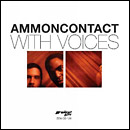
Ammoncontact - With Voices

Ammoncontact
With Voices
Ninja Tune, 2006

This is a collaboration between Carlos Nino and Fabian Ammon, who I gather are pretty involved in the LA music scene. The album is dedicated to J. Dilla, which speaks to the production style Ammoncontact are into – MPCs and trap kits, dubby sounds and soulful vamps. The record could work as an instrumental, arguably better, but I guess that’s the whole point of the “with voices” angle. And I salute the ambitiousness of it.

There are some pretty heavy medium-fi players on this album, including Daedelus, and Cut Chemist, as well as jazz outsider greats like Yusef Lateef. The best tracks put down a groove with oblique loops over top: asymmetrical rhymes, lopsided guitar parts, slightly non-conventional melodies. Aspects remind me of some nameless acid jazz stuff that Josh Neelands and Anthony James Peckover gave me years ago.

It’s difficult for me to feel entirely comfortable with songs that rhyme about the sun, moon, and stars and love and life and all that (“Beautiful Flowers” for example), so I admit to a certain aversion at times. But these elements are hit and miss; some lyrics work really well, and given how ridiculous hip hop can get sometimes I can get behind lines that preach positivity rather than blind consumerist pleasuring. Titles like “Elevation”, “Drum Riders”, and “Earth’s Children” (one of the best by the way, with a really subtle sample and kit combo) create an ‘all weed and dimmed lights’ vibe - in the very best sense. It’s an album that given the right setting, you can submerge into its thrubby darkness.

On the whole, the production on With Voices is pretty unreal. Great balance and dynamics, and a good mix between digital and live percussive sound. Each track feels like a short trip across an ever-changing, glitchy landscape, rough with digital grit. Recommended, but lyrical parts may be too sunshiny for the unprepared.

Monday, September 11, 2006

Black Turtleneck - Musical Chairs

Black Turtleneck
Musical Chairs
Normals Welcome, 2006

There is a mincing seriousness to this album, which makes their name a wry puzzle. There seems to be an element of poking fun at the humourless chin-scratching electronic crowd, while the band also steps right into some of the stereotypes they are mocking. Perhaps they’re just acknowledging the preciousness in electronic music that often emerges when vocals are involved. A slightly English sounding vocal part here, a single line drenched in delay there, suddenly its 1985 and your hair hurts from the gel.

Black Turtleneck is a collaboration of Jason Amm (of Solvent) taking care of synthesizers and programming, and Thomas Sinclair, who handles programming and vocal duties. In some ways they are very similar to Solvent, in the furry, vintage-synth sounds, video game bleeps and nostalgic step-sequenced stuffs, but the vocals add a different element. The vocals meet somewhere between New Order and Depeche Mode, but can also sometimes steer toward the more interesting and irregular stylings of Tarwater. The Black Turtleneck aesthetic is decidedly retro, and done with skill—suitable for those nights when it’s just you, your leather bodysuit, sulkiness and a half-bottle of dry sherry. Technocracy! Remorse! Drizzle!

Finally, Musical Chairs is an album of infinitely danceable music without requiring the thumping quarter-note bass attack you hear from every passing Civic, and the melodies are quite catchy to boot.

But again, I can’t be certain about whether the album is in homage to the 80s, or stuck in them, and that uncertainty makes this album one that’s spun selectively. When I’m really in the mood, and my bodysuit looks particularly maudlin without me.

Wednesday, September 01, 2004

The Graveyard in Matrix - September 2006

The Graveyard - by Scott W. Gray
September 2006


Announcements about the Echo and Polaris prizes came to me around the time I was writing this issue’s piece, and I must say I’m pleased that independent artists are finally being recognized on their merits. Both of these prizes are juried by media flacks and awarded for songwriting, rather than unit sales, genre, or sculpted, muscular booties.

As these prizes recognize, there is an abundance of great bands in this country. There always has been, of course, but history shows that groups die out due to a lack of exposure and subsequent financial problems. Recording and distributing an album (not to mention touring a country of this size) is expensive. The Canadian industry has grown up a lot, market economics have changed a bit in the digital world, and there’s now a real possibility for independent bands to be reasonably successful here.

Exposure, however, still means everything to this process, and I can support anything (like the Polaris and Echo prizes, odd blogs, etc.) that shines the spotlight on the great talent here. With this in mind, here are songs by five artists that were in regular rotation on the Graveyard stereo over the last few months. I urge you check them out.

Christine Fellows: When I first heard Mary Margaret O’Hara’s “Body’s In Trouble” I stopped dead in my tracks, my thin teenage shoulders pulled up like I expected a crash behind me. Utterly arresting, disquieting, and inimitable. Christine Fellow’s song “Vertebrae”, from her Paper Anniversary album (Six Shooter), has much the same quality. It’s an exercise in restraint and tense understatement. Excellent musicianship (particularly from the strings and percussion) accompanies a voice that’s clear in the upper register and slightly frayed in the middle tones. Warm electric piano sounds and cello sweeps trail out over not-as-goofy-as-you’d-expect glockenspiels. If you think she’s prodigiously talented when she says, “I am deadfall. Deadfall,” then wait for the chorus. One of the most startling albums I’ve heard recently.

The Besnard Lakes: From Besnard Lakes’ yet-to-be-released album Dark Horse Transmissions, I spent a good deal of time listening to “Ride the Rails”. This new Besnards album (to be released on Jagjaguwar this fall) is considerably more orchestrated than Volume I, their previous release, with strings, choir-like vocals, and field recordings that jackknife into the arrangements against the Besnards’ signature guitars (high-volume, dive-bombing). “Ride the Rails” displays their development: essentially two songs in one that pivot on a single guitar riff nearly two minutes in, “Ride the Rails” features members of Bell Orchestre complimenting a very-70s mood piece that shifts into a solemn but hooky chorus drenched in reverbed vocals. As well, the vocals on the new album are stronger than in the past, offering more confident deliveries and tighter harmonies. If Volume I was the Besnard Lakes’ Loveless, then Dark Horse Transmissions is their Pet Sounds.

Islands: Formed from the brittle little bones of the Unicorns, Islands emerged in 2006 with Return to the Sea (Equator Records). Full of some of the smartest dumb pop you’ve ever heard, this is the sort of album that ends up in endless repeat because you hum it to yourself for hours after hearing it. The track that stuck with me most was “Rough Gem” (though “Don’t Call Me Whitney, Bobby” was a very close second), with its ‘Come On Eileen’ melody, tiny pizzicato string breaks, and tight but not flashy drums, this song left me scratching my head and pumping my fist. As an added touch, I like hearing Nick Diamonds singing about diamonds.

World Provider: What most music writers will tell you (over beers that you will have to pay for) is that a great deal of material arrives for review that sounds just like everything else, even among the non-mainstream albums out there. But nothing really sounds like World Provider’s Lost Illusions (out on Ta-Da). You can draw associations among the art-rock bands that he could be referencing (Devo, for example) but it takes a very strange sensibility to put them together as World Provider does. Strange tastes, oddly unsettling. The most successful songs on Lost Illusions follow a synth driven melodic lead, with interesting vocal harmonic lines – sometimes manipulated digitally – and very simple snare-kick, hat-handclap percussion. “Valentine” made onto my mix discs and took me through most of this summer. Featuring a guest appearance by Leslie Feist, “Valentine” merges a loping, neo-country vocal twang over fuzzy electro in a surprisingly effective way. Sneaks up on you, then bam, you have a weird moustache and you’re dancing in unfamiliar clothes.

Bell Orchestre: Bell Orchestre’s stunning instrumental debut album Recording a Tape in the Colour of the Light (released on Rough Trade in late 2005) is a roiling weird of french-horns, violins and trumpets that I listened to all spring. I was impressed by the subtlety and interplay between the instruments on quieter tracks, but I was unprepared for the way “The Upward March” rocked out. Built over a very simple digital click, the band adds textures and colours to create a piece that by its end is locked in a solid groove, while still tearing against itself. A sort of hyphen band (i.e.: post-rock, or math-rock, or classically-inspired, all of which apply), Bell Orchestre create pieces rather than songs, but there’s a vitality to them all that keep them fresh and unpretentious. Long, murmuring drones open out to raucous crashes and stabbing horns; the music is a stormy affair. “The Upward March” is probably the most luminous and anthemic on the album, so it’s an obvious repeater on the ipod, but the album as a whole creates a mood worth pursuing.

With independent Canadian talent increasingly being recognized by labels and media (and ugh…”tastemakers”) outside the country, listeners here deserve to know what that faint buzz is about. If you haven’t heard the five albums above, or any of the finalists in the prizes I’ve mentioned, I recommend tracking them all down. Each artist is unique but they share some strange commonalities - quirkiness, a sort of optimistic sadness, rich, idiosyncratic songwriting, and ultimately, independence.

To read more about artists like these, or random stuffs, check out the blog - Urban Camouflage: http://urbancamouflage.blogspot.com/. See you there, or in the Graveyard next time.

Sunday, August 01, 2004

The Graveyard in Matrix - August 2007

The Graveyard - by Scott W. Gray
August 2007

Music and filmmaking have enjoyed a symbiotic relationship for many years. When I think about the scenes I most remember from films, often the music in the scene figures as prominently in my memory. I don’t think Apocalypse Now would be the same film without the inclusion of the Doors “The End” or Wagner’s “Charge of the Light Brigade”. Chas Tenenbaum’s attempted suicide in The Royal Tenenbaums is now absolutely tied to Elliott Smith’s “Needle in the Hay”, and it is very hard to think of Simon & Garfunkle’s “The Sound of Silence” without remembering the final scene in The Graduate (incidentally, I have read that The Graduate was the first film to utilize music to specifically connect scenes).

Obviously there have been official soundtracks to movies released commercially since the 1950s, and in the 1990s we saw many mainstream releases of music “inspired by” a film’s soundtrack (essentially releasing several albums of material for one movie), taking soundtracks to a ridiculous, self-aware and self-serving level.

Cinematic music, however, can be thought of as different from an official soundtrack simply because it is unconnected to a specific film. It merely suggests filmic scenes in the mind of the listener. In a sense, when coupled with headphones and portable players, cinematic music is the soundtrack or score to your life in real time.

The evolution of abstract electronic and post-rock music over the years, as well as the growing appeal of instrumental hip hop (credited in some circles to the popularity DJ Shadow’s 1996 Endtroducing album) has brought the concept of cinematic music to another level. Artists of all stripes have begun forging albums that play with combinations of disparate genres, rely more heavily on tone and texture than melody and harmony, and seek to convey a larger vision in their albums. The evolution of sample-culture has perhaps made the relationship between film and music slightly more parasitic than perfectly symbiotic, as many artists make cinematic tracks that sample directly from cinema; however, even these releases are meant to be non-specific soundtracks, intended to create a new work from existing works.

In celebration of this issue’s theme of filmmaking, I decided to write about some of the more cinematic releases I’ve heard in the last few months. All three are excellent, Canadian releases, and to varying degrees present a cinematic form of songwriting.

Handsome FursPlague Park (Sub Pop, 2007): Dan Boeckner is best known as one half of Wolf Parade’s vocal tandem. In Handsome Furs, his work with wife Alexei Perry, we are treated to a more direct expression of his unique songwriting skills. The songs on Plague Park speak of alienation, regret and the darker sides of human personality and are all delivered in Boeckner’s trademark tenor – a voice that makes up for its lack of range by conveying the full-spectrum of emotion. Plague Park is cinematic in how it evolves; consistently hinting at a deeper, non-revealed storyline (apparently Plague Park is a mass grave-cum city park in Finland), and the album remains restrained just-inside a complete emotional collapse. It is tense and tender, bristling and sophisticated, without being heavy-handed or histrionic. Despite the darkness, Plague Park comes highly recommended.

SixtooJackals and Vipers in the Envy of Man (Ninja Tune, 2007): Sixtoo’s Jackals and Vipers in the Envy of Man is a rugged, cut-up album of instrumental hip hop, released on the venerable Ninja Tune label. Best known for his tough, downtempo beats and crunchy production, Sixtoo (born Vaughn Robert Squire) has crafted an album that evokes a dark, moody aesthetic from the opening notes that continues throughout. Jackals is a film-noir type of release, featuring thirteen unnamed tracks compiled from various live performances, stitched together to present dark shadows and melancholy. At his best, Sixtoo shifts between warmth and frigidity, displaying a head-nodding muscularity and obsession with texture, evoking images in the mind of the listener. Jackals builds on Sixtoo’s reputation as a top-flight producer, and offers the listener an excursion into the dirty urbane – back alleys and fire escapes, rainy streets and neon signs. It is an album very much worth investigating.

A Northern Chorus The Millions Too Many (Sonic Unyon, 2007): Seemingly one of Canada’s least-recognized aural juggernauts returns with The Millions Too Many. While not a post-rock album specifically, A Northern Chorus have crafted an intricate, multi-layered album of strings and rolling syncopation that certainly pushes at rock’s ragged edge. In this album there are wide landscapes and rugged train yards, lakes and lightening storms. Surprisingly, The Millions Too Many is A Northern Chorus’ most-accessible album to date, yet still relies on severe dynamic change-ups, extended violin and cello passages, reverberating slide guitar, and intimate male-female vocal harmonies. Like instrumental groups such as Explosions in the Sky, and (Toronto’s) Do Make Say Think, A Northern Chorus crafts a cinematic music that is mostly consonant, replete with crashing cymbals over major chord passages; however, it is in the quieter moments that the group build their substance, best display their artistry and provide the soundtrack to any listener’s concealed sense of optimism. This is a uniquely Canadian album reminding me at times of Lenny Breau, the Rheostatics and the Wooden Stars, without sounding derivative of anyone else. The energy that A Northern Chorus conveys in their live performances has finally been captured on The Millions Too Many by Holy Fuck member Graham Walsh, and it is an album you deserve to hear.

For those of you interested in reading more about how music and film interrelate, I suggest you read my Graveyard column in the last issue of Matrix (issue 77), exploring the best in music documentaries.

Or, to read more about music of this sort, you can always visit the Urban Camouflage blog (http://urbancamouflage.blogspot.com/). See you next time in the Graveyard.

Thursday, January 01, 2004

The Graveyard in Matrix - January 2007

The Graveyard - by Scott W. Gray
January 2007


I recently began re-reading A Year with Swollen Appendices – Brian Eno’s diary from the year 1995. The end of the book, the appendices, in fact, features a few of Eno’s essays – most notably ‘Ambient Music’, written in 1996 as an explanation of the thought process behind his seminal album Music for Airports. In ‘Ambient Music’, Eno suggests that a viable music for the future would offer a soundtrack, of sorts, for every situation.

His idea was for a music designed to incorporate the sounds of the environment it is played in, blurring the line between accidental, ambient noise and recorded sound design. It was what he said would be an ideal music, one that offered “a place, a feeling, an all-around tint to the sonic environment”. His inspiration came while standing in the Cologne airport, and he envisioned compositions that played throughout the building, but that left room for the tempo and frequency range of the human voice to allow for airport announcements to filter into the immersive music.

The development of technology and advent of the portable music player (whether cassette, CD or MP3) has brought this immersive soundtrack idea to a really individual level, as we all know. One of the clearest memories I have involved a long taxi ride from the airport through a rainstorm, while listening to Vangelis’ Bladerunner soundtrack. I kept the volume low so I could still hear the engine noise, the traffic in the rain, and random bursts of cabbie-speak from the CB radio, between the synth-swells. It was an exercise that established a noir, futuristic mood for me (strangely also connected to airports) that carried over into apartment. I felt like I should have been slipping into a modular sci-fi bubblehome with sleek plastic surfaces and rounded corners, but instead I was just flopping into a rather grotty three-and-a-half in a neighbourhood full of junkies and meth addicts. I have since moved, but the personal soundtrack idea stays with me.

These days I’ve been making playlists on the iPod to dovetail with my Metro ride to work and around town. Which playlist gets chosen usually depends on the mood I am in or the mood I am trying to create. On these wintry mornings, the most affecting stuff is minimalist, sparse instrumental music that blends the ambient noise of the Metro (such as the train sounds, but also the wind, conversations between commuters, and station announcements) or the city (crowds, kids, traffic, announcements from stores) into the music. Most fitting, I have found lately, is the work of Mexican electronic musician Murcof, and US artist EdIT.

Murcof (Tijuana native, Fernando Corona) creates sparse but engaging glitch-based compositions that often sample from 20th century composers such as Arvo Part and Henryk Gorecki. The result is decidedly downtempo, but has enough texture to remain stimulating. His music offers orchestral samples that pull against silence and microtextural elements – landscapes of near-silences that fall outside the usual musical categories such as melody or rhythm, and yet infuse the music with sounds that become invaluable to the finished piece. I find myself making onomatopoeic gurgles in syncopation with the tracks, picking up on the small details. These are often the elements that blend most seamlessly with the context I am in while listening; I lose track of where the subway or city sounds end and song structures begin. I enjoy the peculiar confusion of not knowing how much of what I am hearing is built into the pieces and how much is environmental. The Murcof material that I have is out on the Leaf Label, and albums like 2005’s Remembranza put some smarts back into the much-maligned ambient electronic art form.

Along the same lines, but certainly busier, is Los Angeles’ EdIT (aka Edward Ma). I sort of stumbled across his 2004 album Crying Over Pros for No Reason one day by searching online and spiralling into the seemingly endless micro-genres of electronic music, where individual artists (and sometimes just tracks), apparently warrant genre names of their own. The sub-category that brought EdIT to my attention is the unfortunately named ‘glitch hop’ (alternately known as ‘blip hop’) which pairs hip hop’s head-bobbing tempos and thick bass with glitch-based electronic music’s polyrhythmic snaps and whirs. It’s an engaging combination, and one that EdIT excels at. Similar in construction to other instrumental hip hop such as Alias or Boom Bip, EdIT puts the rhythm first but employs a cinematic approach, sampling in layers of gritty sediment and aural detritus to complement a kick-snare, kick-SNARE combination. It’s smart without being chin-stroking. Between the thick kicks and grainy snares, there are a lot of stretched notes and quick cuts that are reminiscent of Aphex Twin, without the maliciousness.

Despite the density in texture EdIT is adept at allowing acoustic sounds and warmth to spread, showing that his music is not all bombast and breaks, and implying that below the busyness of our city life, there lurks a spacious green space if we choose to look for it. I find that listening to EdIT at low volumes while walking through wintry parks can add a crunching snow and breaking branch steadiness to the mix, and yet there’s enough bounce to his music to really influence the listener’s outlook. Immersive music is interesting most in its simplicity: music constantly renews itself when blended with and informed by an ever-changing environment. We often don’t hear the sounds we are surrounded by on a daily basis simply because of familiarity, but immersive music changes the context and the impact of these sounds. The idea of turning down the music so the real world seeps in is a profound one, because it seems counter-intuitive. Like most commuters I usually turn the music up to drown out the Metro or city noises, thus making my own little bubble. But by keeping the music (or for an even richer experience, field recordings) at a lower level, it offers the opportunity for a more complete sonic experience.

Creating immersive soundtracks change how you see things, and how you exist in the city, the Metro, and international airports. To read more about artists like these, or random music stuffs, check out the blog - Urban Camouflage: http://urbancamouflage.blogspot.com/. See you in the Graveyard, next time.